
Ballet looks effortless, but it is physically demanding. Dancers jump, turn, balance on their toes and stretch to extreme ranges, often for many hours a week. That makes injuries fairly common, especially in the feet, ankles, knees, hips and back. The good news is that many injuries can be prevented with good technique, sensible training and early care. This guide is general information, not medical advice; always see a doctor or physiotherapist for pain that does not go away.
Common ballet injuries
Ankle sprains. Landing awkwardly from a jump or rolling over on pointe can stretch or tear the ligaments around the ankle.
Achilles tendinopathy. Irritation of the large tendon at the back of the heel, often from lots of jumping and relevés.
Stress fractures. Tiny cracks in bones, often in the foot or lower leg, caused by repeated stress without enough recovery. They are more likely when dancers train hard without enough food or rest.
Posterior ankle impingement. Pinching at the back of the ankle when pointing the foot fully, common in dancers who work on pointe or demi-pointe.
Hallux valgus (bunions) and big toe problems. Pressure on the big toe from turnout, relevés and pointe shoes.
Knee pain. Often linked to forcing turnout from the knees rather than the hips, or to landing jumps with poor alignment.
Hip problems. Snapping hip, labral tears and muscle strains can come from repeated extreme movements of the hip.
Lower back pain. Arching the back too much, especially in arabesque, or weak core muscles can strain the lower back.

Why dancers get injured
- Overuse: Repeating the same movements many times without enough rest.
- Forced turnout: Twisting the knees and feet beyond what the hips allow.
- Poor landings: Not using a full plié when landing jumps.
- Fatigue: Long rehearsals and performance seasons.
- Growth spurts: Young dancers may temporarily lose flexibility and coordination as bones grow quickly.
- Hard floors: Dancing on concrete or unsprung floors.
- Not eating enough: Low energy intake can affect bone health and recovery.
How to prevent injuries
- Warm up properly before class and cool down afterwards.
- Work within your natural turnout, keeping knees over toes.
- Land jumps through the foot into plié.
- Strengthen the whole body. Cross-training such as Pilates, swimming and strength work helps support ballet technique.
- Rest. Have at least one full day off each week and take breaks between busy seasons.
- Eat well and stay hydrated. Dancers need enough energy, protein, calcium and vitamin D.
- Wear the right shoes. Well-fitted ballet and pointe shoes reduce strain on feet and ankles.
- Dance on suitable floors. Sprung floors absorb impact.
- Listen to your body. Pain is a warning, not something to push through.
What to do if you get hurt
For minor sprains and strains, many health services advise rest, ice wrapped in a cloth, gentle compression and raising the injured area for the first day or two. Stop dancing on the injured part and let your teacher know.
See a healthcare professional if:
- You cannot put weight on the leg or foot
- There is a lot of swelling or bruising
- Pain is severe or lasts more than a few days
- The joint feels unstable or locks
- Pain keeps returning in the same spot
Physiotherapists and doctors who specialise in dance medicine understand the demands of ballet and can help you return safely.
Coming back after an injury
Return gradually. Many dancers start with barre only, then add centre work and jumps over time. Your physiotherapist may give exercises to rebuild strength and balance. Rushing back too soon is a common cause of re-injury.
Summary
Injuries are a real part of ballet life, but they are not inevitable. Good technique, smart training, rest, nutrition and early care go a long way. Treat your body as your instrument, and it will let you dance for many years.


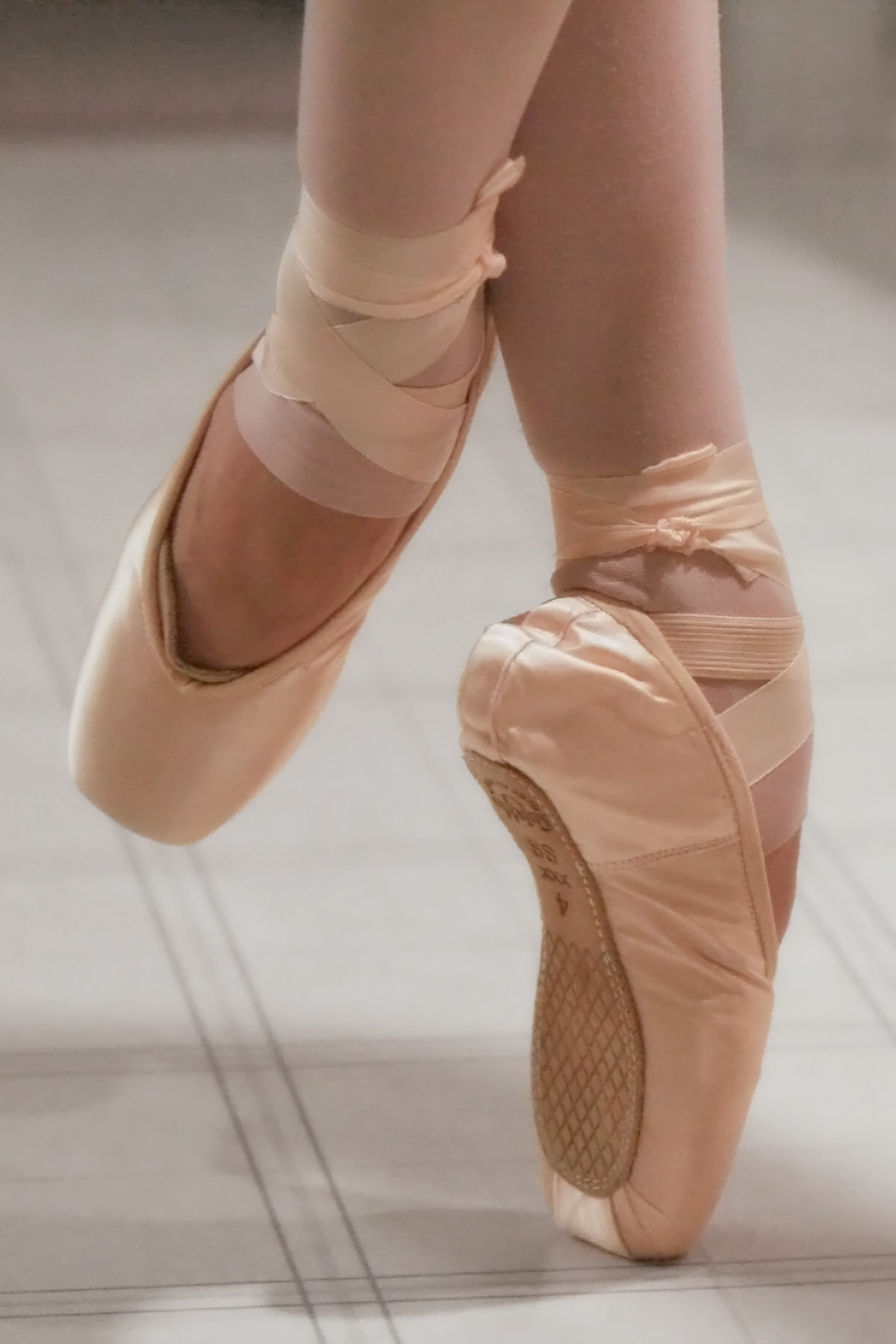
Photo credits: A dancer's feet in pointe shoes: Lambtron (talk) The original uploader was Lambtron at English Wikipedia., Public domain, via Wikimedia Commons; Edgar Degas painting of a dancer stretching: Edgar Degas, Public domain, via Wikimedia Commons.